
Tennis
US Open: New York winner Naomi Osaka: Shy and shy only off court

A shadow lay over the US open triumph of Naomi Osaka. The experts agree that the 20-year-old Japanese will be heard a lot more in the future.
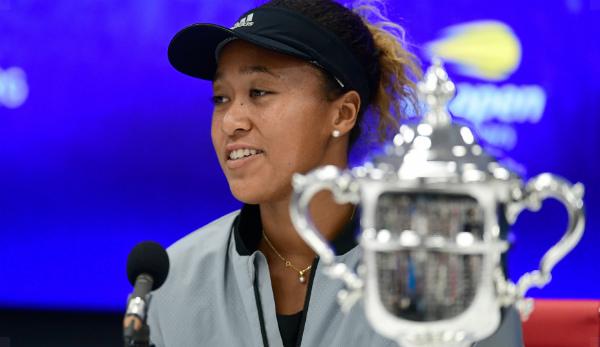
In the deafening whistling concert Naomi Osaka finally pulled her peaked cap deep into her face. But the emotionally touched US Open queen could not hide her tears from the fans in the world’s biggest tennis stadium, not from a TV audience of millions around the globe: The 20-year-old exceptional talent’s first Grand Slam victory, the first Japanese triumph with one of the tennis majors, was beyond all norm and order.
Osaka’s first brilliant highlight in a promising career, a 6-2, 6-4 win over Serena Williams, almost went under in the tumult over the American superstar’s referee insults. “It was not a happy ending,” Osaka said later, “I almost suffered a little with Serena. She’s my idol, after all, and she’s going to stay one.”
Osaka, the new greatness in global women’s tennis, more than deserved unreserved attention after the final. Because how the shy and shy Asian woman appeared off court in this ultimate duel with her own idol was simply remarkable. And worthy of a Grand Slam title.
Osaka played courageously, courageously, concentrated in the starting phase of the final. And she also remained calm, incredibly calm and almost hardened when the final chaos around and with Williams took its course. “I was so focused on myself that it didn’t affect me that much,” said the 20-year-old later.
Also in their last service game, in the heated atmosphere in Ashe Stadium, Osaka showed no nerves, served the game calmly over the finish line. “A masterpiece,” said coach Sascha Bajin later. It was also the first coup of his career for the Munich trainer, once he had started as a so-called sparring partner of Serena Williams in the travelling circus.
When asked if there would be a big joint victory celebration in Team Osaka, the winner of the day afterwards replied defensively: “I’ll go to bed sooner. Or play a video game.” And a glass of bubbly, to celebrate? “No, I’m only 20.”
Osaka has long been regarded by experts as a promise for the future in the women’s circuit – also because her tough, consistent, gripping play always recalls her role model Serena. In order to have better prospects for a tennis career, Osaka’s family moved to America in 2001 – father Leonard Francois, a US citizen with Haitian roots, had mainly oriented himself on the career of the Williams sisters and hoped for a similar career for his children Mari and Naomi.
But only Naomi made it to the international top, already at the age of 15 she played her first tournaments on the WTA-Tour. In March, she won her first important title at the top competition in Indian Wells, California, beating former and current number one spies Maria Scarapova, Karolina Pliskova and Simona Halep, among others. The New York title coup now catapulted her into the top ten for the first time, to rank 7 on the list of the best.
Is Osaka’s triumph triggering a new tennis boom in Japan? Up to now, the US Open winner at home was considered somewhat disparagingly only as “Hafu”, as a half Japanese. “People are always a little confused when they read my name – and then see me with my skin colour at some point,” says Osaka. Her mother had even been expelled by her own family because of her marriage to a dark-skinned American and had no contact with her home for ten years.
On the weekend, however, Osaka’s coup in faraway New York provided a little national soul balm after the plagues of the last few days, the weather chaos surrounding typhoon “Jebi” and the severe earthquake on the North Island of Hokkaido. “She could now become the second tennis superstar next to Kei Nishikori,” says former Japanese top player Kimiko Date, one of Steffi Graf’s long-time companions, “and she will be a face of the 2020 Olympic Games in Tokyo.












You must be logged in to post a comment Login